
Duncanville Previous Residents by Era
No single record identifies every prior household at an address. The reliable route changes with the period. Dallas County deed books establish a title trail, DCAD supplies a present parcel anchor, directories and the 2007 White Pages preserve dated listings, and released census schedules add household context. City permit material can date work at a location but does not establish who lived there. Keep the source type separate from the conclusion drawn from it.
| Source | Years covered | Where it is kept | What it can show |
|---|---|---|---|
| Dallas County deed and OPR books | County records from 1846; online cutoff not located | County Clerk portal, counter, and archival routes | Transfers, liens, plats, legal descriptions, recorded parties |
| DCAD appraisal account | Current card; data products listed 2022-2027 | DCAD eSearch and parcel map online | Tax owner, situs and mailing fields, account, legal description |
| Duncanville 242 directory | 2006, 2007, 2007-08 | Dallas Public Library reading room | Area telephone and address snapshot |
| Cedar Hill 141 area books | 1954-72 and later listed years through 2007, with gaps | Dallas Public Library | Duncanville-inclusive historical listings |
| Greater Dallas White Pages | June 2007 | Portal to Texas History online | Name, phone, street address, and city context |
| Federal population schedules | Decennial, currently through 1950 | NARA, FamilySearch, or library access | Household, age, relationship, and geography |
| Duncanville permits | Current portal; historic cutoff not located | Citizen Access and city records | Project timing, roles, inspections, and address clues |
For a recent transfer, begin with the parcel and deed. For a gap between transfers, use the best-fit directory year, newspaper notice, and released census. For early periods, Dallas County microfilm may be the only route. An unlisted person or a missing online record is not proof that the address trail has ended.
Freeze a Duncanville Parcel First
Save the current property details before working backward. The Dallas Central Appraisal District eSearch and its parcel map can supply the site address, account number, neighborhood code, map grid, legal description, subdivision, lot or block, and tax-mailing field. The site or situs address is the physical parcel address. A mailing address is where tax notices go, so the two fields should not be merged.
A newly created DCAD account can carry a lot number before a municipality supplies a house number. That makes the legal description especially valuable in an older Duncanville search. Search an exact address and a less-specific version if a direction or street type blocks a match. The parcel number, lot or block, subdivision, and legal description often survive better than street wording.
- Capture the current site address and DCAD account number.
- Write down legal description 1 and legal description 2 exactly as displayed.
- Keep subdivision, lot, block, map-grid, and neighborhood details together.
- Mark the mailing field as a tax-contact field, not an occupancy finding.
Duncanville Previous Residents Deed Chain
A deed chain identifies successive recorded parties, not every person who lived at a location. Start with the current DCAD owner, then use the Dallas County Official Public Record search with the property-record department and a plausible date range. Search the current owner as grantee to find an acquisition deed. Capture the grantor, grantee, recorded date, instrument number, document type, legal description, and image or copy route before moving to the prior link.
The County deed-index search is the online source for the Duncanville previous residents title trail.
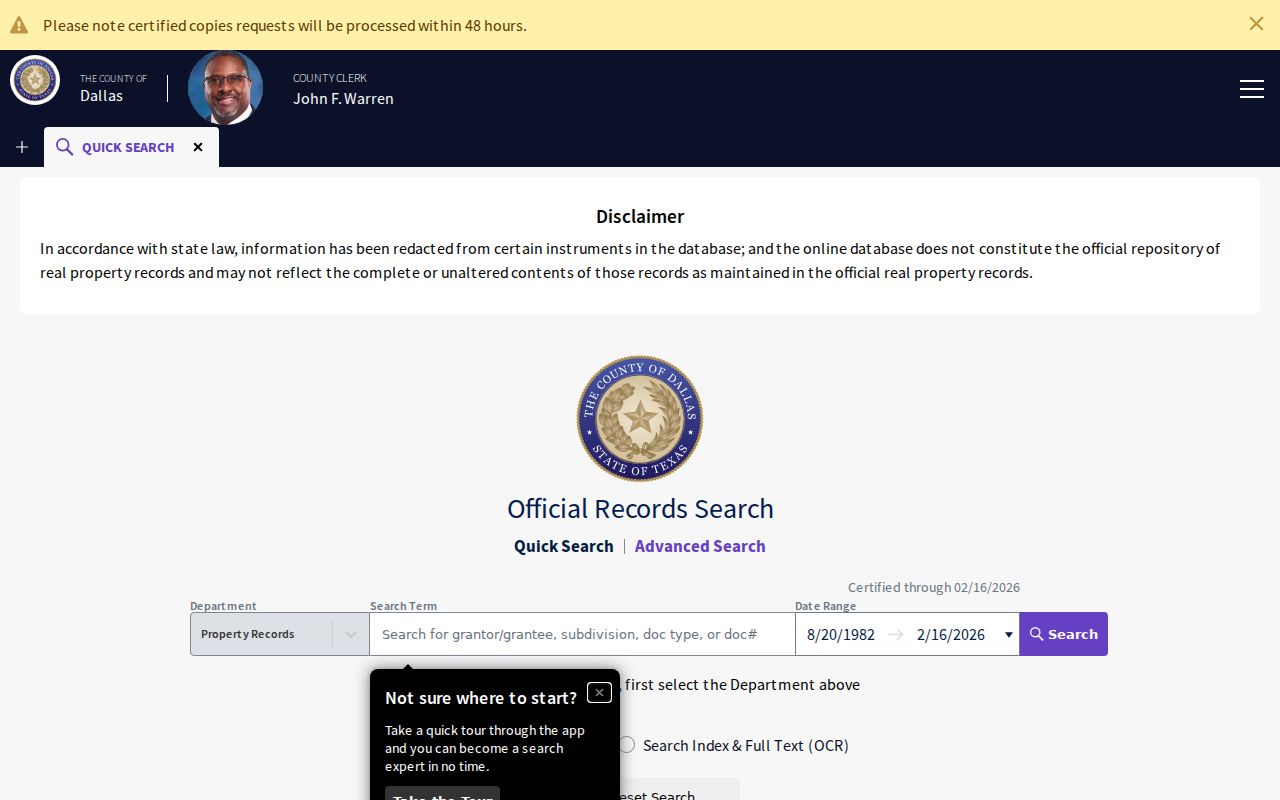
Search the seller from that deed as the next historical grantee. A seller may have held several county properties, so require a matching subdivision, lot or block, survey, or compatible legal description before adding a transfer to the chain. A deed of trust, release, lien, plat, or correction belongs in the notes, but it is not automatically a change of title.
- Open the current parcel and preserve its legal description.
- Search the present owner as grantee in County property records.
- Record the instrument details and the seller named as grantor.
- Search that seller as grantee, using the same parcel description to test the link.
- Repeat backward until the chain reaches a developer, original subdivision transfer, or a record that needs an offline route.
- Grantor and grantee
- The grantor transfers an interest; the grantee receives it in the recorded document.
- Chain of title
- The dated sequence of recorded transfers tied to the same legal parcel.
- Legal description
- The subdivision, lot, block, tract, or survey wording that identifies land even when street text changes.
- Enumeration district
- The census area used to organize a census count; it helps locate the appropriate schedule pages.
When Duncanville's Index Ends
Dallas County says its records reach county establishment in 1846, but the official research did not locate a historical online-index cutoff. Do not invent one. When a deed link stops appearing online, move to the County Clerk Recording Division or Central Records counter and ask for an existing record by name, instrument number, date range, document type, and legal description. The Recording Division is at 500 Elm Street, Suite 2100, Dallas, and lists 214-653-7099. Current notices can affect service, so verify access before travel.
The County Clerk copy form supports mail requests to Dallas County Clerk Recording Division, Attn: Index, 500 Elm Street, 2nd Floor, Dallas, TX 75202, with a prepaid self-addressed stamped envelope. It lists plain copies at $1 per page per document and certified copies at $1 per page plus $5 certification per document. The form calls for business check, cashier's check, or money order, not a personal check. Ask for the current requirements before sending payment.
For material not online, Dallas Public Library and the Texas State Library provide microfilm routes. A Texas Public Information Act request can seek an existing county record when the custodian has it. State the record, date range, and desired format rather than asking staff to conduct open-ended research. The county's current notice says email and other services can change, so the counter, phone, mail, and request routes remain important.
Note: An online gap reflects a delivery limit, not a claim that the county has no earlier record.
Duncanville Directory-Era Residents
Once the title dates are known, historical directories help fill intervals between deeds. The Duncanville 242 Telephone Directory covers 2006, 2007, and 2007-08. When an earlier year is needed, the Cedar Hill 141 books include Duncanville from 1954 through 1972 and at later listed points through 2007, while the DeSoto and Lancaster area books offer other southwest-area years. The collections themselves are described in the Duncanville city directory collections.
The June 2007 Greater Dallas White Pages is a digitized Southwestern Bell residence-pages volume. It is a regional snapshot, not a city-limit roster, so use the city line and adjacent-community context when considering a listing.
The Portal to Texas History White Pages record provides the online source for Duncanville previous residents research.
A directory line can connect a name, phone, street address, and printed city at one point in time. Compare it to the page image because OCR can misread initials and street abbreviations. It should be treated as a dated listing rather than a definitive statement about an address today.
Duncanville Directories and Census Pairs
A title record can show a transfer, while a directory and census schedule can add household context. Pair each directory year with the nearest released federal schedule. The 72-year release practice means 1950 is currently available. A directory is annual and address-oriented; a census is decennial and organized by enumeration. The two may differ in spelling, community label, or address formatting, so compare several facts before joining them.
- Use the deed dates to select the right directory interval.
- Find the address or surname in the relevant city-inclusive directory.
- Record title, year, page or image, street line, and printed initials.
- Locate the nearest released census enumeration district and household.
- Use a local newspaper, probate file, or later deed to test a move, death, or successor clue.
Duncanville Public Library's NewspaperArchive access adds local title ranges: Duncanville Today spans 1955-2008, Duncanville Suburban 1960-2004, Duncanvillelite 1965-1992, and Duncanville Daily News 1973-74. Notices and obituaries can narrow a date range, but a published notice should not be used to expose contact details of living people.
Duncanville Names Before Incorporation
For a nineteenth-century chain, a modern city-name search can miss the relevant label. Duncanville's local history traces the area through the Crawford Trees settlement, a railroad-era Duncan Switch, and the Nance post office, renamed Duncanville in 1882. An 1884 commercial fire followed the growing depot and business period. These names are useful search terms in deeds, newspapers, railroad history, post-office material, and early Dallas County records.
Duncanville incorporated in 1947, so early people and property trails frequently belong in county, railroad, cemetery, church, or nearby-Dallas sources rather than a municipal file. The Texas State Library guide lists tax rolls from 1846 to 1910, selected district court papers through 1938, and inquest or death material into 1969. Some volumes were not filmed or indexed completely. Record the reel, volume, and document number rather than citing a broad collection name alone.
Duncanville Map and Permit Gaps
The city's permit system can supply a timing clue for construction, alteration, inspections, and recorded contact roles at an address, but the research did not locate a historical public-search cutoff. A permit is not evidence that a named person lived there. Use it beside, not instead of, the recorded deed and dated directory. City maps can also help with a parcel, subdivision, intersection, or old street variant, but their boundaries are informational rather than a legal survey.
Dallas Public Library holds Sanborn fire-insurance and property-ownership maps, while Library of Congress material identified in the research concerns Dallas editions. No Duncanville-specific Sanborn edition was located. Do not assume a Duncanville sheet exists. For an address with a map gap, rely on plats, legal descriptions, aerials, permits, street maps, and the directory sequence.
Duncanville House-History Desks
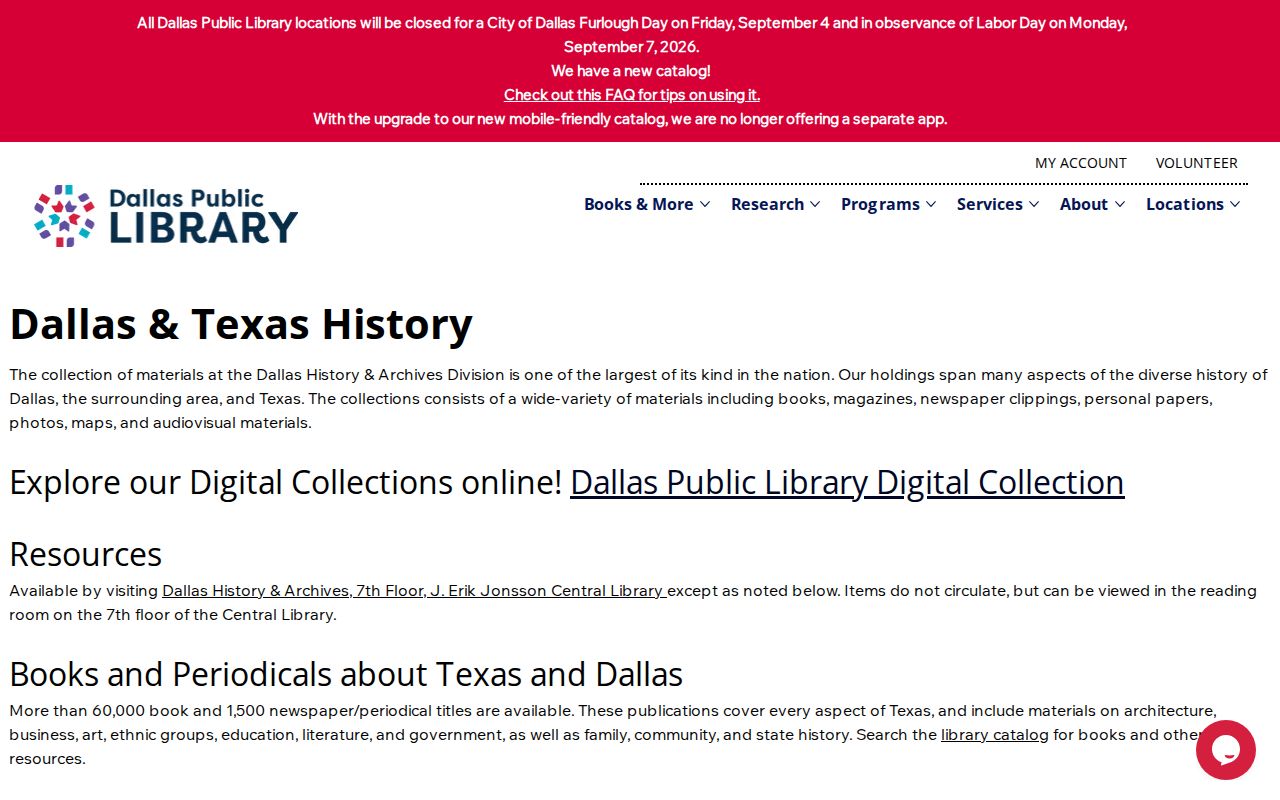
Dallas History & Archives on the seventh floor of the J. Erik Jonsson Central Library is the strongest official house-history service located for this area. It holds property-ownership maps, Sanborn maps, street maps, directories, newspapers, and county microfilm. Materials are noncirculating and used in the reading room. Send a focused question to texas@dallas.gov with the address, approximate years, subdivision or lot and block, known names, and the specific title or reel requested.
The Dallas History & Archives page is the source for the Duncanville previous residents reading-room route.
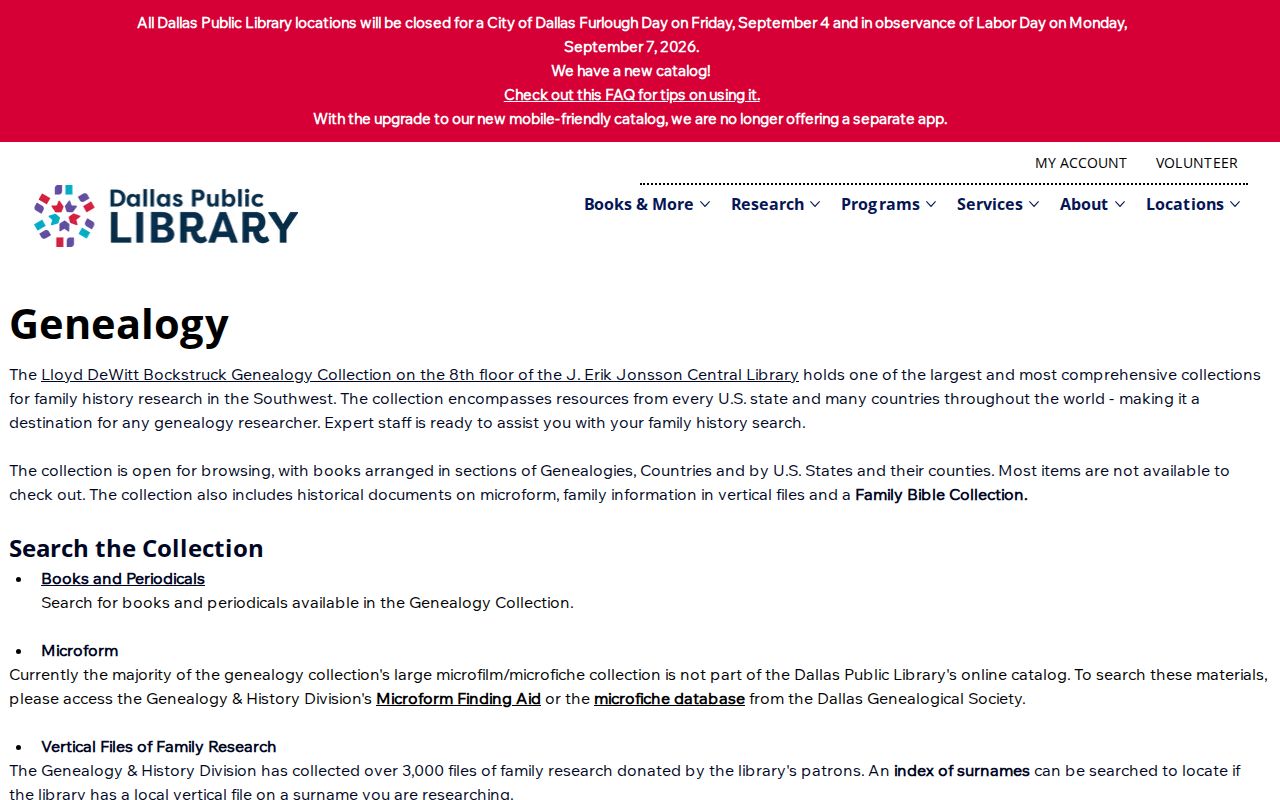
The library's eighth-floor Bockstruck Genealogy Collection adds surname vertical files, historical microform, yearbooks, Family Bibles, and books organized by family and place. It is useful when a directory or deed name needs family-history context.
The Bockstruck Genealogy Collection page identifies this companion source for Duncanville previous residents research.
For a second archive channel, Dallas Historical Society offers appointment research into regional photographs, documents, and papers. It is not a guaranteed house file. A short, precise request with the person, year, address, and Dallas County connection is more likely to match a cataloged collection.
Duncanville Previous Residents Limits
Ownership, directory, mailing, and census records describe different relationships to an address. A DCAD owner is not automatically the person at the site. A directory listing is a snapshot, and a later tax-mailing line can be a trust, representative, or another administrative contact. Sensitive, sealed, protected-voter, and confidential-address information can be withheld or replaced under Texas law. Leave such information out of personal notes and never try to reconstruct it from scattered records.
Lawful use. Duncanville previous residents research is appropriate for house history, family history, and personal curiosity. Texas Penal Code sections 42.072 and 42.07 address stalking and harassment; never use records to track, threaten, or contact a living person against their wishes.
Verify any needed official copy through the custodian. The County Clerk's index is non-certified access, while a plain or certified document follows a separate request and fee process. Keep the page, reel, or instrument reference with each conclusion so another researcher can check the same source.