
Duncanville Resident Lookup Coverage
Duncanville sits in Dallas County, so a one-person search can cross city, county, and Texas custodians. Start with the question being tested. The Dallas Central Appraisal District eSearch identifies the tax account, not everyone connected with an address. The Dallas County records hub leads to court, probate, recording, and marriage routes. Texas agencies supply voter-status and vital-record channels with their own access rules. A match in one source should be compared with a second independent detail.
| Record | What It Confirms | Custodian Route | Access Condition |
|---|---|---|---|
| DCAD account | Tax-record owner, physical parcel address (situs), mailing address, legal parcel | DCAD eSearch | Public; owner is not necessarily an occupant |
| Recorded instrument | Recorded property parties, instrument, and property chain | Dallas County Official Public Records | Public index; copies and certification use separate workflows |
| Voter status | Registration status and permitted public identity elements | Dallas County Elections | Dynamic official workflow; protected addresses can be withheld |
| Court case | Party role, case number, status, and public filings | Dallas County court routes | Sealed, juvenile, and sensitive records have limits |
| Birth or death index | Name, event date, county, and sex | Texas DSHS Vital Statistics | An index is not a certificate |
| Marriage or probate record | License details, estate filings, or letters | Dallas County Clerk | County and court procedures vary by record |
A full name and an approximate date are useful for a court or vital search. A street address is stronger for the DCAD property route. When the aim is family history, combine an older directory or obituary with probate and recorded conveyances rather than treating a current tax account as historical proof.
Build a Duncanville Resident Lookup Record Card
Write down the name exactly as found, then list middle, maiden, former, and spelling variants separately. Add an approximate age, an address, a ZIP code, a relative or spouse, and a date range only when those details are already known. This small record card prevents a search from silently combining two people with the same name. It also helps distinguish a historic directory entry from an address appearing on a newer court filing.
The verification path should preserve the meaning of each field. A DCAD situs address is the physical parcel address, while its mailing address is where tax notices go. A voter file can carry permanent and mailing addresses. Deeds are anchored by their legal description, and court addresses can simply be an address used in a filing. Matching labels matter as much as matching text.
- Search the name and address separately in DCAD, retaining the account number and legal description when a relevant result appears.
- Check the county court routes with name variants, party role, date range, and any available date-of-birth detail.
- Use the official voter-status route only to test registration, not to reconstruct a household.
- Compare a vital index or marriage record only against the event facts it actually provides.
- Accept the identification only after two independent clues agree, such as a parcel and recorded party or a name, event, and relative.
One name hit is not enough. Read a court disposition, a date, and the custodian scope before drawing a conclusion.
Confirm a Duncanville Resident Lookup at DCAD
DCAD is the best local starting point when a name is tied to a property. Its eSearch modes include Owner Name, Account Number, Street Address, Business Name, and Map. The resulting account can connect the tax-record owner to a situs address, a mailing address, and the parcel’s legal description. It cannot establish every person who lives there, receives mail there, or has any other connection with that location.
| Account Field | How to Read It |
|---|---|
| Owner name | Name specified on the last deed, useful for a recorded-property search |
| Situs address | Physical property address supplied by the municipality |
| Mailing address | Tax-notice destination, which may identify a trust or other contact |
| Account number and map grid | Keys that help reopen the parcel and compare related records |
| Legal description | Subdivision, lot, block, tract, area, or survey information for deed matching |
| Exemptions and jurisdictions | Tax-account details that require careful, limited interpretation |
Use the legal description to look for the current owner as grantee, the party receiving the property, in the county’s Official Public Records index. The record trail may then identify the seller, instrument number, and recorded date. A homestead flag can be consistent with owner occupancy, but it is not conclusive proof that a particular person is currently present.
Duncanville Court Parties and Case Status
The public Dallas County criminal name search shows the county’s name and case controls. It asks for a required last name and optional first and middle names, with filters for name type, race, sex, month, day, year, number type, and pending or disposed status. A case-number path is also present. During inspection, the name route displayed a case-number-required alert even though name fields were visible, so a fresh search may be necessary.
Dallas County’s criminal name-search form illustrates why a Duncanville resident lookup should retain party role and case status, not just a name.
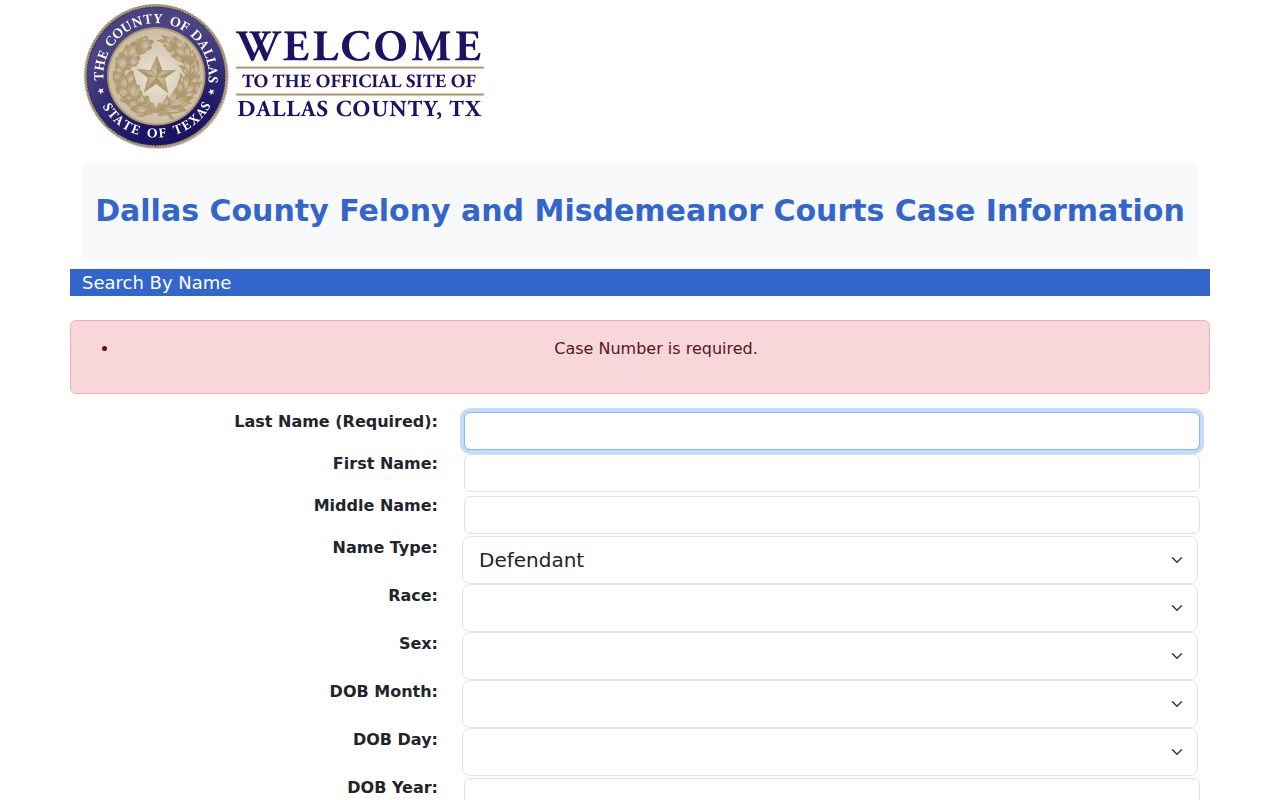
A returned case can identify a party role, case number, category, date, status or disposition, and public docket links where available. It is not proof of guilt, liability, current address, or identity. Dallas County’s civil case information reaches back to 1975, while most civil files are after 2008; sealed, confidential, and sensitive child material is not a general public web result.
For city-limit Class C and ordinance matters, contact the Duncanville Municipal Court. Its official page provides court and calendar information but no public name-search form was located. Ask the clerk about a specific citation or case and its copy process. Probate can also be relevant to an heir trail; some records are online, while recent documents and counters vary.
Duncanville Voter Status Is Not a Roster
Dallas County Elections’ voter status route is the local official check. The public-facing screen is dynamic, and stable current field labels were not captured in the research. Use the live county or VoteTexas workflow with the exact legal spelling and required identity prompts. A status result is evidence about registration, not a list of everyone at an address.
The Dallas County voter-status screen is shown here as the official starting point for an individual status check.
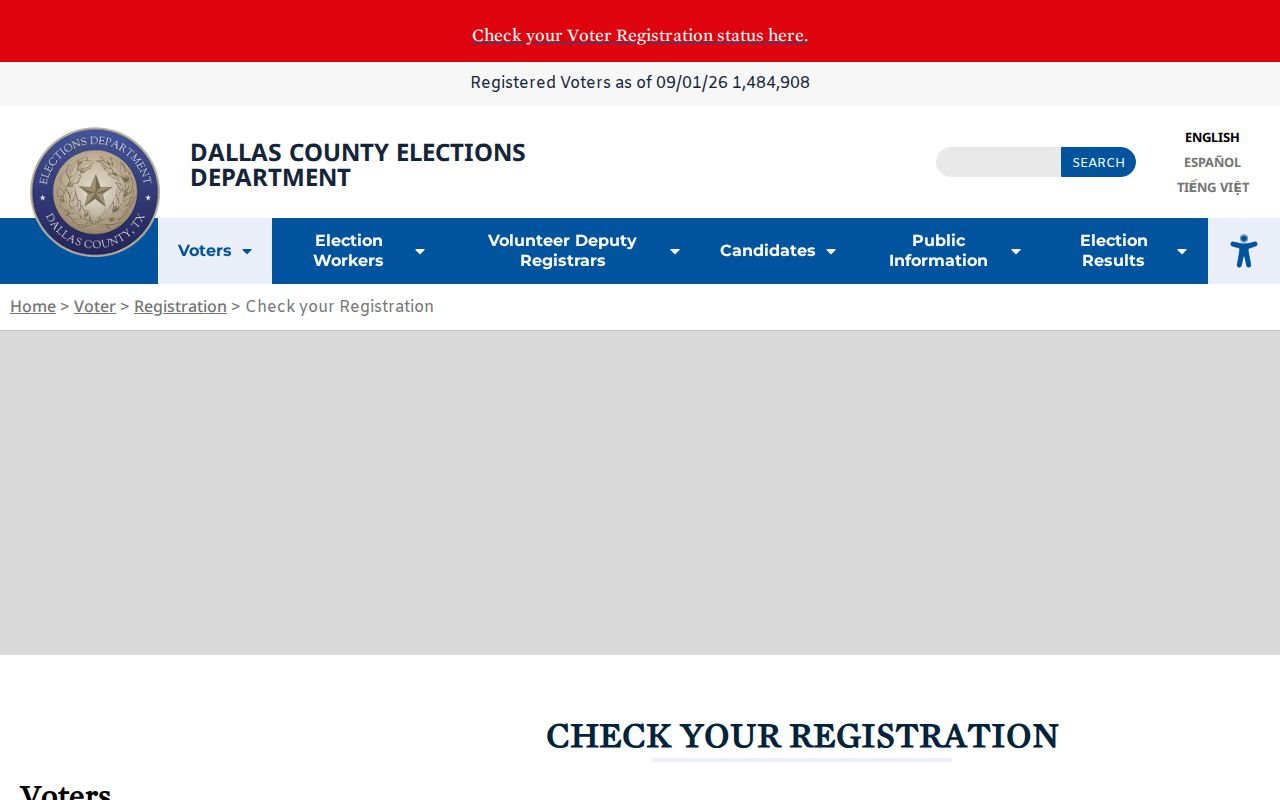
Texas records can treat permanent and mailing address as separate fields, and a status can reflect later maintenance activity. Protected voters may have residence information withheld. Public participation information identifies elections in which a person voted, not how that person voted and not a permanent party registration.
VoteTexas provides the state gateway that hands a visitor toward the official registration workflow.
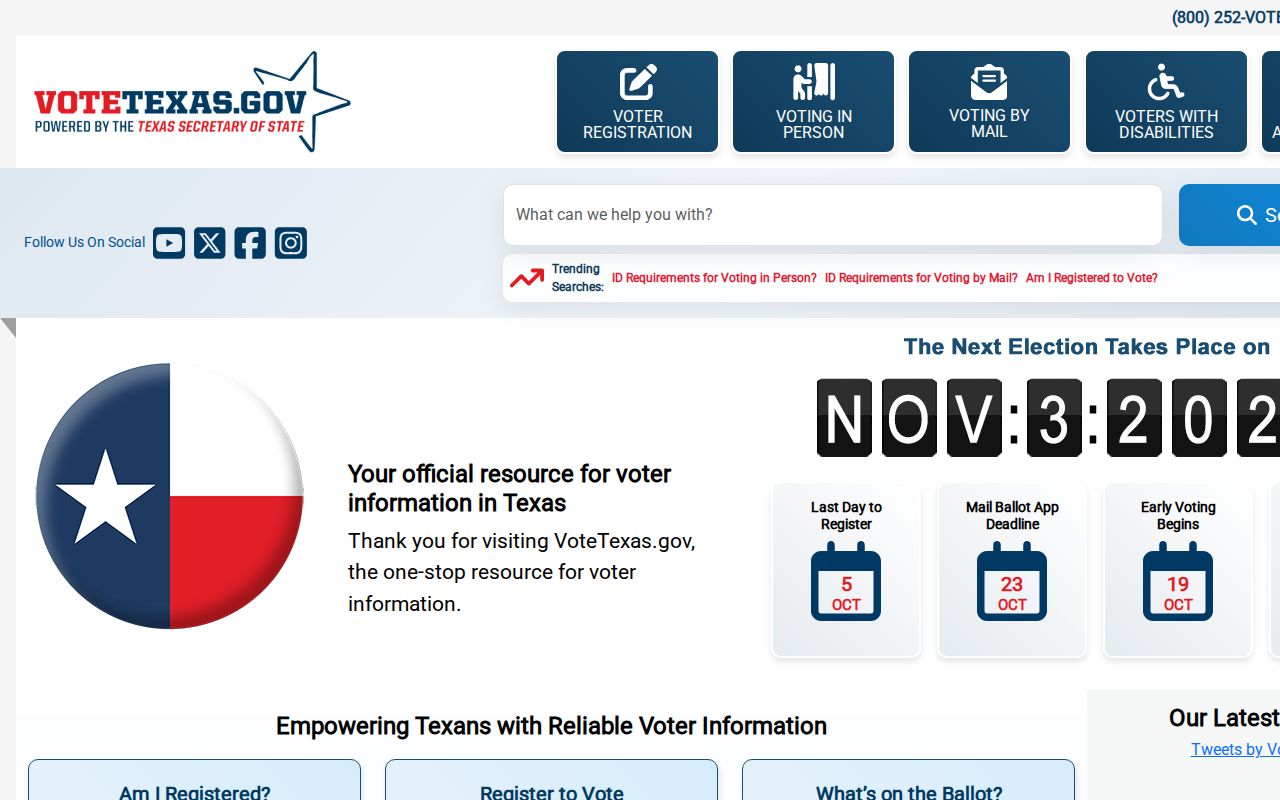
A statewide voter-file extract is different from the individual lookup. It uses a notarized affidavit, requires a $75 deposit, and can be delivered by CD-ROM or FTP after payment. The request form offers status, date, age, county, precinct, and election reductions, while Texas Election Code restrictions protect certain data and bar use of master-file data to promote commercial products or services.
Duncanville Vital Record Time Windows
Texas vital records supply a useful numbers check for a resident lookup. DSHS lists digital birth indexes from 1925 and death indexes from 1965, with earlier microfiche beginning in 1903. The index fields are surname, given names or initials, event date, county, and sex. A digital index request is priced at $10 for each event year. These fields can corroborate an identity, but they are not a certified record and should not be read as a current-location signal.
Texas DSHS online-order requirements show the identity and relationship conditions that apply when a certificate, rather than an index, is requested.
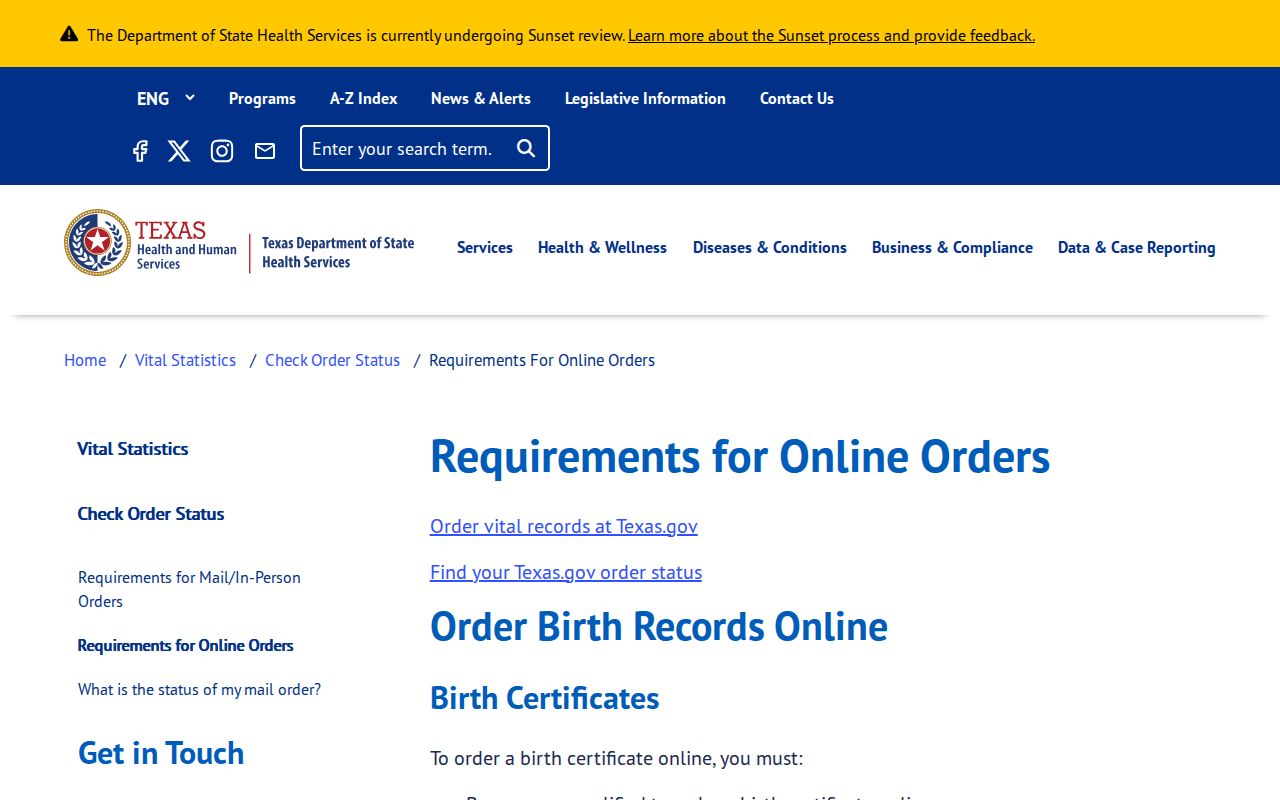
Under the DSHS summary of Texas Government Code §552.115, birth records open after the 75th anniversary and death records after the 25th anniversary. Before those periods, certified copies depend on relationship or documented direct and tangible interest. DSHS has separate online, mail, and in-person routes; its online-order rules call for identity, relationship, and event details. No phone request route is stated for birth records.
Duncanville Marriage and Divorce Checks
For a Dallas County marriage record, the Dallas County Clerk’s marriage route is the custodian. Its inspected request form asks for each applicant’s name, marriage date, requester relationship, return address, contact details, and copy preference. A certified copy costs $10, is county-only, and the form reports a six-to-eight-week mail allowance. An unsuccessful search still has a nonrefundable $10 search fee.
Marriage and divorce are not interchangeable record types. DSHS can issue a marriage or divorce verification, but the actual divorce decree is held by the court that entered it. Use the District Clerk or appropriate county court route for a decree, and expect sealed or sensitive material to remain unavailable. These distinctions stop a name match from being mistaken for the document needed for an estate or family-history question.
Duncanville Resident Lookup Beyond Portals
Online silence is not proof that Dallas County has no record. The county’s online coverage differs by court and record series, and current Central Records notices can identify years that are temporarily in-person only. The County Clerk’s recording index also has no verified online start year in the research. For archived or non-web material, use the counter, a mail request, or the reel-based Dallas County resources held through Dallas Public Library and the Texas State Library and Archives Commission.
A written Texas Public Information Act request should seek existing records from the correct governmental body. Name the record type, person or address, date range, and desired format. The law does not require an office to answer a research question, create a new report, or maintain a continuing search. The request may trigger a fee estimate, an exception review, or a production date rather than an immediate release.
Dallas County Clerk
For recording, marriage, county-court, and related records, use the county hub or call 214-653-7099 before a counter visit.
District Clerk
Civil case information and district-file access have separate coverage and counter procedures. The records desk number in the research is 214-653-6076.
Duncanville Resident Lookup Terms
Record labels can look alike while describing different things. These terms help keep a resident lookup limited to what a source actually establishes.
- Docket
- A court’s running case record, which can list events, filings, dates, and a status. It is not the complete evidence behind a case.
- Index versus image
- An index is a searchable list of record details. An image is the scanned document page and may use a separate access, copy, or certification process.
- Certified copy
- A copy issued and certified by the custodian for an official use. It is different from a search result or plain informational copy.
- Situs address
- The physical location of a parcel. It should not be merged automatically with the owner’s mailing address.
When a result contains only a familiar name, record the missing fields rather than guessing. A legal description, event date, case number, or party role often provides the needed distinction.
Duncanville Privacy Rules for Lookups
Texas Public Information Act access is subject to exceptions, redactions, and record-specific confidentiality. Texas Election Code §§13.004 and 18.005 protect specified voter information, while the Address Confidentiality Program and protected-voter procedures can replace or withhold residence data for qualifying participants. A public case number can coexist with sealed filings, and a public deed index can coexist with restricted sensitive details. Correct an inaccurate government record through the original custodian’s written process.
Lawful use. Use Duncanville resident lookup results for a lawful, personal purpose and keep protected information private. Repeated record use to stalk, harass, or intimidate someone can violate Texas Penal Code §§42.072 and 42.07.
For an address-confidentiality concern, use the Texas Address Confidentiality Program or the Texas Secretary of State’s protected-voter guidance. A missing or masked address is an access limit to respect, not a gap to fill from other sources.